HOW AI WORKS

Utilizing New Intelligence to Solve Old Questions


A Cold Case. A Blurry Photo. A Second Chance.

In 1994, a detective pins a grainy surveillance still to a corkboard. The suspect’s face is barely visible. The case goes cold.

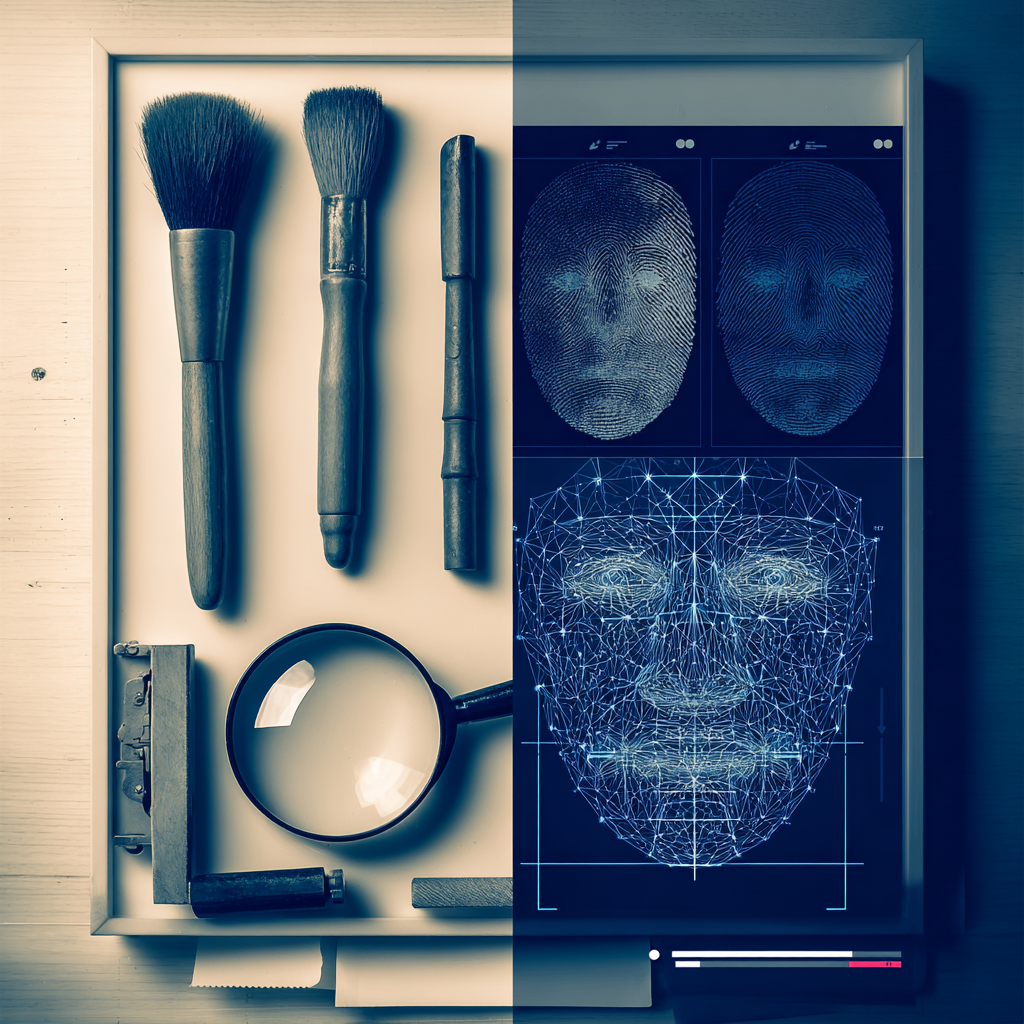
In 2026, that same image is fed into an algorithm trained on millions of facial patterns. The blur sharpens. Landmarks align. A match probability appears.

Same evidence.
New intelligence.

Artificial Intelligence doesn’t replace investigators. It expands what’s possible.

This page explains how.
 

The Evolution of Investigation

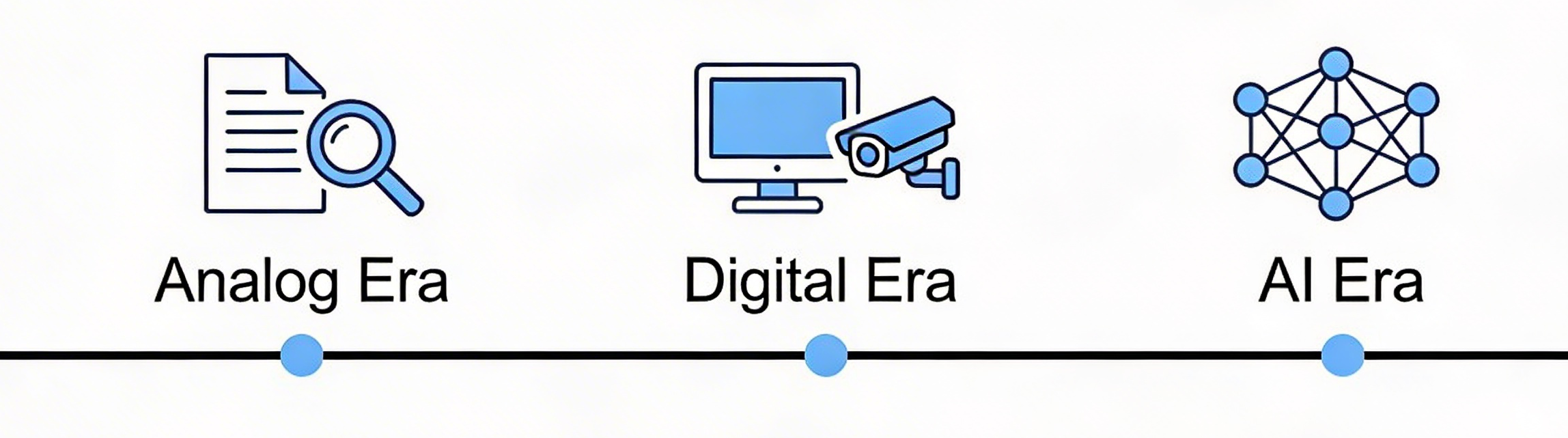
AI didn’t appear overnight. It emerged from decades of technological shifts that transformed how we analyze evidence.


The Analog Era: Human Intuition & Physical Evidence

Before databases and machine learning, investigations relied almost entirely on human interpretation.

  • Fingerprint powder and magnifying lenses
  • Paper files stacked in evidence rooms
  • Witness sketches drawn by hand
  • Manual cross-referencing of names and records

Cases were solved by instinct, experience, and persistence. But scale was limited. Patterns across thousands of cases were nearly impossible to detect.

The Digital Era:
Databases & Early Automation

Computers changed everything.

Evidence could now be stored, searched, and compared at scale.

  • Digital fingerprint databases
  • CCTV recordings
  • Early facial recognition systems
  • DNA matching software
  • Criminal record indexing systems

The shift wasn’t intelligence — it was storage and speed.

But it laid the groundwork.

The AI Era:
Pattern Recognition at Scale

Modern AI systems analyze enormous volumes of data and identify patterns that humans would likely miss.

Today, AI assists with:

  • Facial reconstruction from degraded images
  • Cross-referencing millions of fingerprint points
  • DNA phenotyping and genealogical matching
  • Voice pattern identification
  • Predictive modeling of criminal behavior
  • Analyzing case documents using natural language processing

AI doesn’t “think.”
It predicts — based on patterns learned from data.

What AI Actually Is
(Without the Sci-Fi)

Let’s demystify it.


* Machine Learning

Machine learning is a method where systems learn from data rather than following explicit step-by-step instructions.

If shown thousands of fingerprints labeled “match” or “no match,” a system learns the statistical patterns that distinguish them.

It improves over time.

* Neural Networks

Inspired loosely by the human brain, neural networks process data in layered structures.

Each layer extracts increasingly complex features — edges, shapes, patterns, probabilities.

By the final layer, the system produces a prediction.

* Computer Vision

Computer vision allows AI systems to analyze images and video.

Applications include:

  • Facial recognition
  • License plate detection
  • Object tracking

    • Enhancing low-resolution imagery

* Natural Language Processing (NLP)

NLP allows AI to process written or spoken language.

It can:

  • Analyze witness statements
  • Extract key information from case files
  • Identify linguistic patterns
  • Flag inconsistencies

AI doesn’t understand like humans do — but it models patterns statistically.

And that modeling is powerful.

A Case Simulation: How AI Might Reopen a Cold File

Imagine a 30-year-old unsolved case.

Step 1: Image Enhancement

AI enhances surveillance footage previously considered unusable.

Step 2: Facial Landmark Mapping

It measures and compares facial structures across databases.

Step 3: DNA Genealogy Cross-Matching

Public genealogical databases narrow possible family trees.

Step 4: Behavioral Pattern Modeling

AI analyzes geographic and temporal crime patterns.

Step 5: Language Pattern Analysis

Old letters or transcripts are re-analyzed for stylistic markers.

None of these systems “solve” the case alone.

But together? They generate leads at a scale humans never could.

AI Is Powerful…
But Not Perfect

AI systems reflect the data they are trained on.

This means:

  • Biased datasets can produce biased outcomes
  • False positives can occur
  • Overreliance on automation is dangerous
  • Legal admissibility varies by jurisdiction

Responsible AI use requires:

  • Transparency
  • Oversight
  • Human verification
  • Ethical safeguards

Technology is a tool — not a verdict.

Why This Matters

We are living in a moment where algorithms influence investigations, courtrooms, journalism, and public perception.

Understanding how AI works isn’t optional anymore.

It’s essential.

The question isn’t whether AI will shape investigations.

It’s whether we understand it well enough to use it responsibly.

Where This Project Comes In

Alibis and Algorithms explores the intersection of:

  • Cold cases
  • Emerging technologies
  • Data science
  • Ethics
  • And the future of truth

Because solving the past requires
understanding the tools of the present.

Explore Further

→ Start with a Case File
Listen to the Podcast
→ Submit a Case for Review

New intelligence. Old questions.
Responsible investigation.